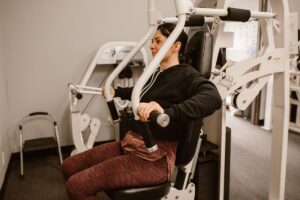

You have done this before. You bought the membership, went hard for three weeks, missed a few days, felt behind, and quietly stopped. Now you are thinking about starting over at the gym Ocala locals keep recommending, and the loudest voice in your head is the one that says you will quit again.
That voice is not proof that you lack character. It is usually proof that the last plan was built for a life you do not actually live.
This post is for the restart. Not the fantasy version where you suddenly love 5 a.m. workouts. The practical version where you rebuild in a way that sticks.
Why Quitting Keeps Happening
Most people who stop training do not fail because they are lazy. They fail because the plan asks for more than their week can give, then treats every missed day like a full reset.
A few patterns show up over and over:
- You start with five hard days a week when two or three would have worked.
- You change workouts, food, sleep, and social habits all at once.
- You train alone with no feedback, then lose confidence when something hurts.
- You miss a week for work or family, then decide the streak is ruined.
- You pick a program designed for someone with different goals, equipment, and recovery.
None of that means you are broken. It means the system was fragile. Fragile systems snap under normal Ocala life: early school drop-offs, long workdays, travel, heat, and the weeks when everything stacks up.
Starting Over at the Gym Ocala Style: Change the Goal of Month One
If you are starting over, month one is not about transforming your body. Month one is about proving you can show up on a schedule your life can support.
That shift matters. When the goal is consistency, a solid 40-minute session counts. When the goal is punishment for past quitting, you overreach and quit again.
A better month-one target looks like this:
- Train two or three days most weeks.
- Leave sessions feeling capable, not wrecked.
- Learn a handful of movements well.
- Sleep and eat well enough to recover.
- Come back after imperfect weeks without a dramatic restart speech.
Progress will follow consistency. The reverse rarely works.
Rebuild the Plan Around Your Real Week
Before you pick exercises, write down the week you actually have. Not the week you wish you had.
Ask:
- Which days are protected, and which days blow up without warning?
- Are mornings realistic, or do evenings work better?
- How many true training days can you protect for the next eight weeks?
- What has caused the last three quit points: schedule, soreness, boredom, injury, or overwhelm?
Then build the smallest plan that still moves you forward. Two coached sessions a week beats a perfect five-day plan you abandon by Thursday.
If you want structure without guessing, personal training in Ocala is built around that kind of customization: goals, limitations, schedule, and progress you can track.
What to Do Differently This Time
Start smaller than your ego wants
Your brain remembers what you used to do. Your body remembers the gap. Bridge the gap with volume you can recover from. Add challenge after attendance is stable.
Protect form over intensity
Poor form feels productive until it creates pain that sidelines you for a month. A coach watching your squat, hinge, push, and pull patterns shortens the learning curve and keeps you training longer.
Separate identity from a perfect streak
Missing Tuesday does not mean you are “someone who quits.” It means Tuesday got messy. The skill is returning on Thursday.
Track one or two markers, not twenty
Pick simple proof: sessions completed, weights you can move with good form, how stairs feel, how your back feels after sitting. Too many metrics create noise.
Make the environment do some of the work
Willpower is a weak plan. A set time, a coach expecting you, and a clear next workout remove decisions you used to lose.
A Simple Four-Week Restart Framework
Use this as a template, then adjust with a coach if you have injuries or special goals.
- Week 1: Reintroduce
- Full-body sessions focused on squat, hinge, push, pull, and carry patterns with light to moderate loads. Leave the gym knowing you could have done a little more.
- Week 2: Stabilize
- Keep the same movements. Add a small amount of volume or slightly better range of motion. Practice leaving one or two reps in reserve.
- Week 3: Progress one variable
- Add weight, add a rep, or improve control. Change one thing at a time so you know what worked.
- Week 4: Prove the habit
- Same schedule. Same structure. Focus on showing up even if energy is average. Review what made attendance easy or hard.
If life knocks you off for a few days, do not rewrite the whole plan. Resume the next scheduled session.
Common Mistakes When You Restart
Trying to “make up” for lost time. Extra sessions and crash diets stack fatigue. They do not buy back the months you missed.
Ignoring old injuries. The knee, shoulder, or low back that bothered you last time will show up again if you pretend it does not exist. Tell your coach early.
Comparing week two to your old peak. That comparison is unfair and useless. Compare week two to week one.
Outsourcing everything to motivation. Motivation comes and goes. Schedule and accountability stay.
Waiting until you feel ready. Readiness usually arrives after you start, not before.
How Coaching Changes a Restart
Training alone asks you to be the athlete, the programmer, the form checker, and the accountability partner. That is a lot when you are already rebuilding trust with yourself.
A coach takes several of those jobs off your plate. At KB Fitness, Kameron Stender and Avery Stender build programs around where you are starting, not where Instagram thinks you should be. Avery brings a physical therapy background and focuses on injury prevention, functional strength, and adaptive training. Kameron has spent a decade helping people build habits that last beyond a short burst of motivation.
You still do the work. You just stop guessing about the work.
If you want a clear next step, the Get Started page is the simplest way to tell us your goals, availability, and how you want to train. A coach will follow up to set a first session or consultation.
FAQ: Starting Over Without Starting Over-and-Over
How many days a week should I train at first?
Most people restarting do well with two or three strength-focused sessions. Add more only after those days are consistent for several weeks.
Should I do cardio every day too?
Not if it crowds out recovery or makes you dread training. Walk often. Keep hard conditioning limited while you rebuild strength habits.
What if I only lasted a month last time?
Look at what broke: schedule, soreness, boredom, or all-or-nothing thinking. Fix that constraint first. A shorter, coached plan usually beats a longer solo plan.
Do I need to get in shape before I hire a trainer?
No. That is backwards. Coaching is most useful at the start, when form, pacing, and confidence matter most. You can read more about what that first visit looks like in our post on your first personal training session in Ocala.
What if I feel embarrassed coming back?
You will not be the first person in the room who restarted. Coaches care about your next session, not your highlight reel from two years ago.
Ready to Restart With a Plan That Fits
Starting over at the gym does not have to mean repeating the same cycle with louder promises. It means building a smaller, clearer plan around the week you actually live in Ocala, then sticking with it long enough for results to catch up.
If you want help doing that with real coaching instead of another downloadable workout PDF, reach out through Get Started, call or text (352) 502-9052, or stop by KB Fitness at 2506 SE 17th Street, Unit B, Ocala, FL 34471.