Both group training and personal training deliver results when done correctly. But they serve different needs, suit different personalities, and create distinct experiences. Understanding these differences helps you choose the format that aligns with your goals, budget, and learning preferences.
Here’s an honest comparison of group training versus 1-on-1 personal training to help you make an informed decision.
What Group Training Actually Includes
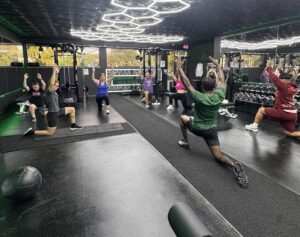
Group training brings 4-12 people together for coach-led sessions following structured programming. Everyone performs the same workout with modifications as needed for individual limitations or fitness levels.
Structure: Sessions typically run 45-60 minutes with defined start and end times. Programming follows templates designed to work for diverse fitness levels through scaling options (lighter weights, modified movements, reduced volume).
Coaching: One or two coaches lead the session, provide demonstrations, offer general form corrections, and create a motivating environment. Individual attention is limited by group size.
Programming: Workouts are designed in advance to challenge a range of fitness levels. You don’t get individualized programming addressing your specific goals or limitations.
Cost: Group training typically costs $100-200 monthly for unlimited sessions or $15-30 per drop-in class.
What 1-on-1 Personal Training Includes
Personal training provides dedicated one-on-one coaching time focused entirely on you. Your coach designs programming specific to your goals, limitations, and preferences.
Structure: Sessions are scheduled at times convenient for you and your coach. Typical length is 45-60 minutes, though this can vary based on programming needs.
Coaching: Your trainer’s complete attention throughout the session. Immediate form corrections, real-time program adjustments, and detailed feedback on every exercise.
Programming: Completely individualized based on initial assessment, ongoing progress, and evolving goals. Every exercise selection and progression decision considers your specific situation.
Cost: Personal training typically costs $200-800+ monthly depending on session frequency and coach experience.
Key Differences That Matter
Individual Attention and Form Correction
Group training: Coaches circulate and provide corrections when they notice problems, but they can’t watch everyone simultaneously. You may perform multiple reps with poor form before receiving feedback. Some participants get more attention than others based on visible need and proximity to the coach.
Personal training: Your coach watches every rep, provides immediate corrections, and ensures technical quality before adding load or complexity. This accelerates learning and prevents injury from reinforced poor mechanics.
Winner for form development: Personal training, significantly. This matters most for beginners learning movement patterns or anyone with an injury history requiring specific technical attention.
Programming Customization
Group training: Everyone follows the same workout with scaling options. If the session focuses on lower body and your knee is bothering you, modifications exist, but the fundamental workout structure doesn’t change to accommodate your needs.
Personal training: Complete customization. If your knee bothers you, your coach redesigns the session around that limitation while still achieving training objectives. Programming accounts for your specific goals, available training time, recovery capacity, and preferences.
Winner for customization: Personal training. No contest. Group programming serves the average participant reasonably well but can’t address individual nuance.
Motivation and Accountability
Group training: The social environment creates inherent motivation. Training alongside others pushes you harder than you might push yourself. Group energy and camaraderie provide accountability through community rather than just coach oversight.
Personal training: Accountability comes from your relationship with your coach and your commitment to scheduled appointments. Some people thrive with this structure; others need the social pressure group environments provide.
Winner for motivation: Depends on your personality. Social learners and competitive individuals often prefer group dynamics. Self-directed people who value privacy may prefer 1-on-1 focus.
Cost and Value
Group training: Significantly lower cost per session. $15-30 per class provides professional coaching and structured programming at an accessible price point.
Personal training: Higher per-session cost, but includes complete individualization, full attention, and programming customized to your specific needs.
Winner for value: Depends on your needs and budget. Group training offers excellent value for self-directed individuals who primarily need structure and motivation. Personal training provides better value for people requiring significant individualization or technical instruction.
Schedule Flexibility
Group training: Fixed class times. You adapt your schedule to available sessions. Miss a class and you either drop in elsewhere or skip that training day.
Personal training: Flexible scheduling coordinated with your coach. Need to move a session? Reschedule rather than missing entirely.
Winner for flexibility: Personal training. Important for people with irregular work schedules, frequent travel, or unpredictable family obligations.
Who Thrives in Group Training
Group training works well for specific personality types and situations:
- Self-directed learners: You understand basic movement mechanics, can self-correct minor form issues, and primarily need structure and motivation rather than detailed instruction.
- Social exercisers: You perform better in group environments, enjoy the community aspect of training, and find peer energy motivating rather than distracting.
- Budget-conscious individuals: You want professional coaching and structured programming at a more accessible price point than 1-on-1 training.
- Consistent schedulers: You can commit to fixed class times regularly. Your work and life schedule accommodates predetermined training windows.
- Competitive personalities: You thrive on implicit competition with others, use group performance as motivation, and enjoy pushing yourself alongside peers.
- General fitness goals: You’re pursuing overall health, conditioning, and strength rather than specific performance objectives requiring specialized programming.
Who Benefits More from Personal Training
Personal training serves different needs and learning styles:
- Beginners: You’ve never trained systematically, don’t know proper form, and need detailed instruction before working independently.
- Injury history: You have previous injuries, chronic pain, or movement limitations requiring specific programming accommodation and technical attention.
- Specific performance goals: You’re training for sport-specific performance (equestrian competition, a running race, competitive lifting) requiring specialized programming.
- Need for privacy: You’re uncomfortable training in group settings, prefer focused work without social dynamics, or feel self-conscious around others.
- Complex schedules: Your work, travel, or family obligations create irregular availability that fixed class times can’t accommodate.
- Value individualization: You want programming designed specifically for your body, goals, and limitations rather than scaled group templates.
The Hybrid Approach
Many people benefit from combining both formats:
- Primary personal training + supplemental group sessions: Maintain 1-2 personal sessions weekly for technical work and individualized programming, and add 1-2 group classes for additional volume and social engagement.
- Group training foundation + periodic personal check-ins: Regular group training for structure and community, with personal sessions scheduled monthly or quarterly for form assessment and program adjustments.
- Phase-based approach: Personal training during the initial learning phase or injury recovery, then a transition to group training once movement competency and independence develop.
At KB Fitness, we offer both personal training and group options specifically because we recognize different people need different formats at different times. Your training format should serve your current needs, not force you into a structure that doesn’t fit.
Quality Matters More Than Format
Poor group training and poor personal training both deliver suboptimal results. The format matters less than:
- Coach qualifications: Are coaches certified through reputable organizations? Do they understand movement mechanics, progression strategies, and injury prevention?
- Programming intelligence: Is programming systematic and progressive, or random workouts strung together without a coherent plan?
- Facility quality: Does the training space have adequate equipment, an appropriate atmosphere, and necessary safety features?
- Culture fit: Does the coaching style and environment align with your learning preferences and personality?
A qualified coach leading well-designed group sessions creates better outcomes than an inexperienced trainer providing mediocre 1-on-1 instruction. Format is one variable among many determining training effectiveness.
Trying Both Before Committing
Most quality training facilities offer trial options. Before committing long-term:
- For group training: Drop into 2-3 classes to assess coaching quality, group dynamics, programming style, and whether the environment suits your preferences.
- For personal training: Schedule a consultation and trial session to evaluate coach compatibility, communication style, and whether their approach aligns with your needs.
Experiencing both formats helps you make informed decisions based on actual experience rather than assumptions about what might work.
What KB Fitness Offers
We provide both group training and personal training in Ocala because different people need different formats:
Personal Training: Completely individualized programming with dedicated 1-on-1 coaching from trainers who’ve worked with Olympic-level athletes and professional sports. Best for people requiring customization, detailed technical instruction, or flexible scheduling.
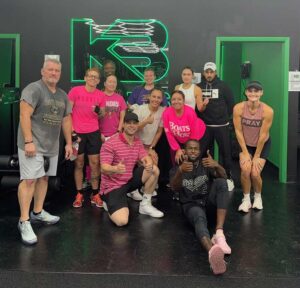
Group Training: Small group sessions (maximum 8 participants) combining professional coaching, structured programming, and a motivating community environment. Best for self-directed individuals who value social training dynamics and cost-effective professional coaching.
Choose What Actually Works for You
The right training format aligns with your goals, learning preferences, schedule reality, and budget. Neither group nor personal training is universally superior. They serve different needs effectively.
Some people thrive in group environments and would find 1-on-1 training isolating and unmotivating. Others need individualized attention and would feel lost or overlooked in group settings.
The best choice is the format you’ll actually use consistently with qualified coaching and intelligent programming.
Ready to Start Training?
Whether you’re interested in personal training, group sessions, or exploring both options, KB Fitness serves Ocala clients with professional coaching designed for sustainable results.
We help clients determine which training format fits their current needs and provide quality coaching in both group and individual settings.