Employee health directly impacts your business outcomes. Lower productivity, increased healthcare costs, higher absenteeism, and decreased morale all correlate with workforce health levels. Corporate wellness programs done correctly address these issues while demonstrating genuine investment in employee wellbeing.
But not all wellness programs deliver results. Generic initiatives that check boxes without creating real engagement waste budget and generate cynicism. Effective programs require structure, expert guidance, and alignment with your workforce’s actual needs.
Here’s what Ocala employers need to know about implementing corporate wellness that actually works.
Why Ocala Businesses Should Prioritize Employee Fitness
Marion County’s business landscape includes sectors where physical capability and energy levels directly affect performance: equestrian industry roles, healthcare facilities, manufacturing, hospitality, and service businesses.
Employees who feel better physically show up more consistently, perform at higher levels, manage stress more effectively, and maintain better attitudes toward their work. This isn’t motivational rhetoric; it’s measurable reality documented across industries.
Healthcare costs continue rising. Preventable chronic conditions (cardiovascular disease, type 2 diabetes, obesity-related issues) drive significant portions of employer health insurance costs. Wellness programs that improve employee health metrics create real financial return through reduced claims and lower premium increases.
Beyond direct cost savings, companies with strong wellness cultures experience better employee retention. In Ocala’s competitive labor market, differentiation through genuine employee investment matters for attracting and keeping quality people.
What Corporate Wellness Programs Should Include
Generic wellness programs offer gym membership discounts and maybe a health fair once yearly. These initiatives create minimal engagement and deliver marginal results.
Effective corporate wellness includes structured components that drive actual behavior change:
Professional fitness coaching: Access to qualified trainers who design programs for diverse fitness levels and health conditions. Not everyone in your workforce can (or should) do the same workout.
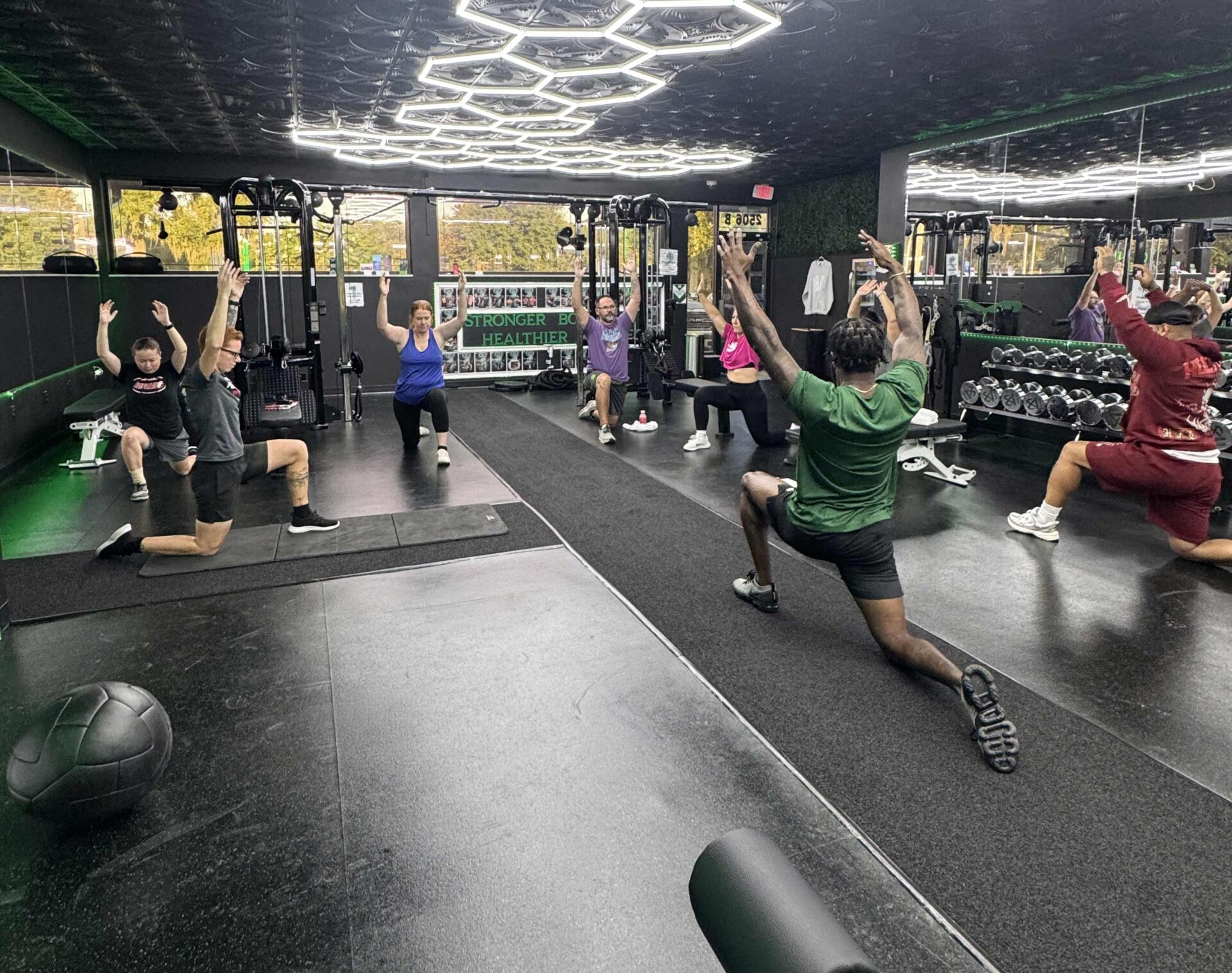
Scheduled group sessions: Regular group fitness classes or small group training at convenient times (before work, lunch hour, after shift). Convenience drives participation.
Individual options: Some employees thrive in group settings; others need one-on-one coaching. Providing both options increases program utilization.
Measurable health metrics: Baseline assessments (movement screening, basic fitness tests, biometric data where appropriate) and periodic re-assessment to track progress and demonstrate ROI.
Nutrition and habit coaching: Exercise alone doesn’t create comprehensive health improvement. Basic nutrition education and habit development support complement physical training.
Accountability systems: Check-in structures, progress tracking, and ongoing communication that keep participants engaged beyond initial enthusiasm.
Structuring Programs for Different Workforce Needs
Your warehouse staff has different needs and schedules than your office team. Your wellness program should account for this reality rather than forcing one format on everyone.
For physically demanding roles: Focus on injury prevention, mobility work, recovery strategies, and targeted strength training that supports job demands without creating excessive fatigue.
For desk-based employees: Address posture dysfunction, build general conditioning, manage stress through movement, and combat the metabolic effects of prolonged sitting.
For mixed workforces: Offer multiple program tracks or flexible formats that allow employees to choose what fits their role, schedule, and current fitness level.
At KB Fitness, we’ve designed corporate wellness programs for Ocala businesses across sectors. The equestrian facility’s program looks different from the professional services firm’s program because their employees face different physical demands and scheduling realities.
Measuring ROI on Corporate Wellness
Executive teams need to justify wellness program investments through measurable returns. Track these metrics:
Healthcare cost trends: Compare year-over-year health insurance claims and premium increases before and after program implementation. Expect 12-24 month lag before significant impact appears.
Absenteeism rates: Track sick days and unplanned absences. Healthier employees miss fewer days.
Productivity metrics: While harder to attribute directly, many companies report improved output per employee after wellness program implementation.
Participation rates: Track program enrollment and ongoing engagement. High participation indicates the program meets actual employee needs.
Employee retention: Compare turnover rates among program participants versus non-participants. Wellness programs often show stronger retention effects than expected.
Biometric improvements: Track changes in employee health markers (blood pressure, body composition, fitness test results) through periodic re-assessment.
ROI timelines vary. Immediate benefits include improved morale and engagement. Health cost impacts typically appear within 18-24 months. Retention effects build over time as wellness culture becomes part of company identity.
Common Implementation Mistakes
Mistake #1: No leadership buy-in
Wellness programs fail when leadership views them as HR checkbox items rather than genuine business investments. Executive participation signals that company values employee health seriously.
Mistake #2: One-size-fits-all programming
Offering only high-intensity boot camps alienates employees who can’t or shouldn’t train that way. Provide options for diverse fitness levels.
Mistake #3: Inconvenient scheduling
Sessions offered only during work hours force employees to choose between their job and program participation. Early morning, lunch, and after-work options increase accessibility.
Mistake #4: Lack of professional instruction
Generic fitness videos or untrained facilitators create injury risk and deliver poor results. Qualified trainers matter.
Mistake #5: No long-term commitment
Launching wellness programs with 3-month trials sends the message that this isn’t serious. Commit to at least 12 months to allow habit formation and culture shift.
Mistake #6: Ignoring feedback
Employee input about scheduling, format preferences, and barriers to participation should shape program evolution. What works theoretically may not work practically for your specific workforce.
Building Wellness Culture Beyond Structured Programs
Successful corporate wellness extends beyond formal training sessions into daily workplace culture:
Physical workspace design: Standing desk options, walking meeting spaces, accessible stairwells, and movement-friendly break areas normalize activity throughout the workday.
Social support systems: Wellness challenges, accountability partnerships, and group participation create peer support that sustains engagement when individual motivation wanes.
Leadership modeling: When executives participate visibly in wellness programs, employees recognize that company commitment is genuine.
Integrated health policies: Smoking cessation support, healthy food options in company cafeterias or vending machines, flexible scheduling for fitness activities. These policies reinforce wellness messaging.
Recognition systems: Acknowledge participation and progress without creating punitive dynamics for those who choose not to engage.
Cost Structures for Corporate Wellness
Corporate wellness programs typically structure costs in several ways:
Per-employee monthly fee: Companies pay fixed monthly amount per enrolled employee. This creates predictable budgeting and aligns provider incentive with program quality (poor programs lose participants).
Flat retainer plus per-session: Company pays base monthly retainer for program management, then per-session fees for group classes or individual training. This works for companies unsure about participation levels.
Pay-per-participant: Employees pay reduced rates (company subsidizes the balance). This creates employee investment while maintaining accessibility.
Investment ranges from $50-150 per participating employee monthly depending on service level, session frequency, and whether programming includes individual options beyond group sessions.
For Ocala businesses, the cost-benefit calculation should factor local market conditions: what does employee replacement cost? What are healthcare trends in your industry? What competitive advantage does strong wellness culture provide for talent attraction?
Legal and Liability Considerations
Corporate wellness programs involve legal considerations beyond general business operations:
ADA compliance: Wellness programs must accommodate employees with disabilities and health conditions. Qualified trainers should understand how to modify programming for diverse abilities.
HIPAA considerations: If your program collects health data, understand privacy obligations and data protection requirements.
Liability insurance: Ensure adequate coverage for fitness activities, whether on-site or off-site. Professional trainers should carry appropriate liability insurance.
Voluntary participation: Programs generally work better when voluntary rather than mandatory, both legally and practically.
Incentive structures: If offering incentives (reduced insurance premiums, cash bonuses), consult legal counsel about regulatory compliance for wellness program incentives.
KB Fitness carries comprehensive liability coverage for corporate wellness work and understands legal considerations Ocala businesses face when implementing workplace fitness programs.
On-Site vs Off-Site Programming
On-site programs:
- Maximize convenience and participation
- Require dedicated space and possibly equipment
- Create stronger visible commitment to wellness culture
- Best for larger companies with suitable facilities
Off-site programs:
- No facility requirements on company property
- Employees train at professional facility with full equipment access
- May create scheduling/transportation barriers
- Works better for smaller companies
Hybrid models:
- Group sessions on-site for convenience
- Individual training available off-site for employees wanting more personalized coaching
- Balances accessibility with professional facility benefits
KB Fitness is located at 2506 SE 17th Street, Unit B in Ocala, providing off-site training options for corporate clients. We also design on-site programming for companies with adequate space and equipment.
Getting Started with Corporate Wellness
Implementing effective wellness programs involves several steps:
- Assess current state: Survey employees about health interests, barriers to fitness, schedule preferences, and what they’d actually use if available.
- Define program goals: What business outcomes justify this investment? Healthcare cost management? Retention improvement? Productivity gains? Recruitment advantage?
- Choose program partner: Select wellness providers based on qualifications, experience with corporate programming, flexibility to customize, and cultural fit with your organization.
- Pilot thoughtfully: Consider starting with smaller employee group or single department rather than company-wide launch. Learn what works before full rollout.
- Communicate clearly: Employees need to understand program availability, how to participate, what’s included, and that participation is genuinely supported.
- Track and adjust: Measure participation, gather feedback, monitor outcomes, and evolve programming based on real data about what’s working.
- Commit long-term: Culture change takes time. Plan for at least 12-18 months before making decisions about program continuation based on ROI.
Why Ocala Employers Should Act Now
Marion County’s business landscape is competitive for quality talent. Companies offering comprehensive benefits including wellness programs differentiate themselves from employers offering only basic health insurance and time off.
The health trends affecting American workers (rising obesity rates, increasing chronic disease prevalence, declining physical fitness) impact productivity and healthcare costs. Waiting for these trends to reverse isn’t a strategy. Proactive wellness investment mitigates these impacts.
Post-pandemic, employee expectations around workplace wellbeing have shifted. People increasingly evaluate employers based on holistic support, not just compensation. Wellness programs signal that you value employees beyond their direct productive output.
Invest in Your Team’s Health
KB Fitness designs corporate wellness programs for Ocala businesses that want real results, not checkbox compliance. Our team includes professionals with experience training Olympic-level athletes and NFL players, bringing that expertise to everyday employee wellness programming.
Whether you need on-site group sessions, off-site training access, or hybrid models combining both, we build programs around your workforce’s actual needs and schedules.
Located at 2506 SE 17th Street, Unit B in Ocala, we serve Marion County businesses across sectors with corporate wellness that drives engagement, improves health metrics, and delivers measurable ROI.
Contact us at 352-502-9052 or kameron.stender@kambamfitness.com to discuss corporate wellness solutions for your Ocala business.