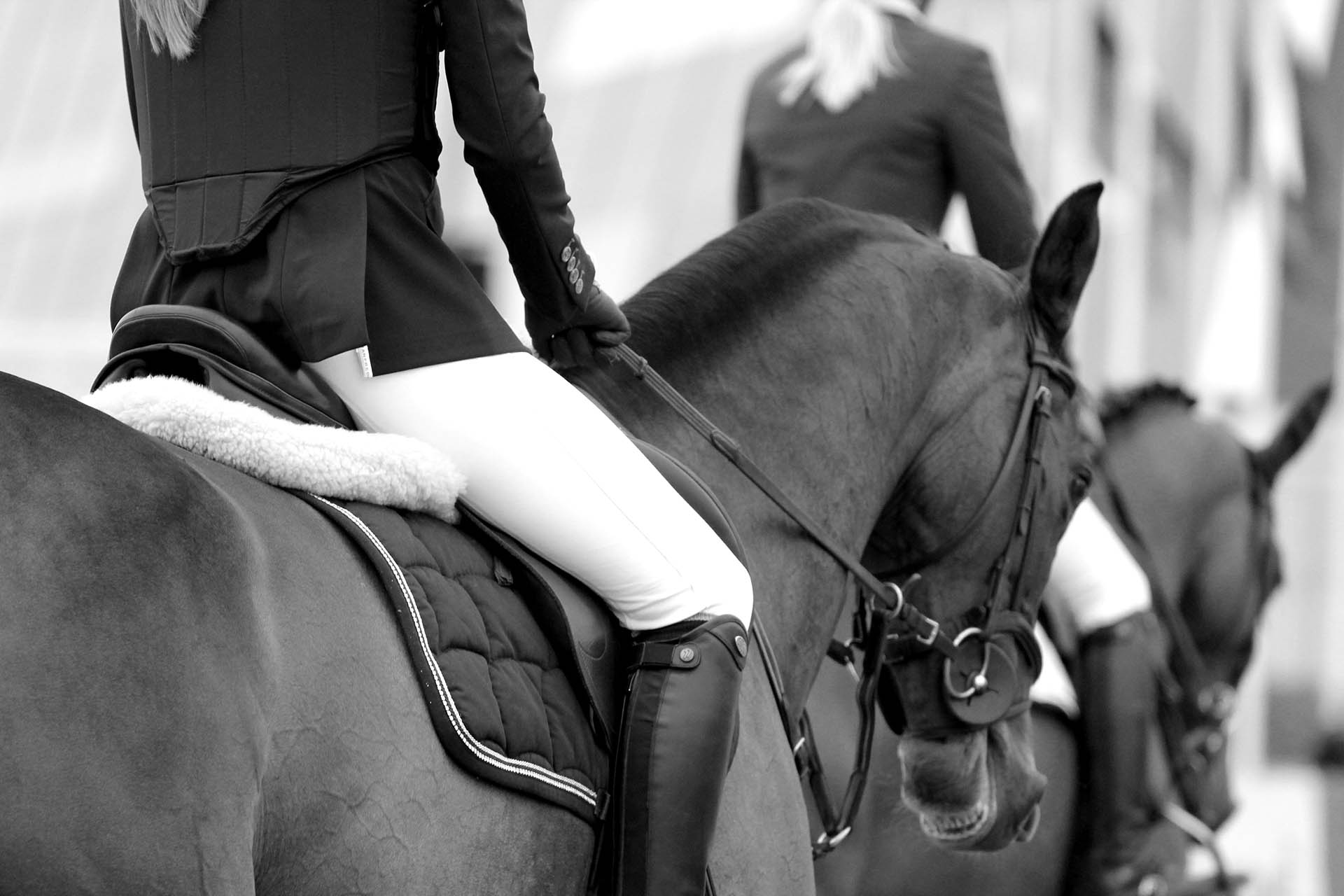
Your seat is the foundation of effective riding. Every aid you apply, every adjustment you make, and every moment of balance flows through your core and pelvis. A weak or unstable core forces compensation patterns that interfere with communication, limit your riding effectiveness, and create unnecessary fatigue.
Most riders know they need “core strength,” but traditional ab exercises like crunches and sit-ups don’t transfer to the specific demands of the saddle. You need core training that builds stability during movement, resists rotational forces, and allows independent leg and arm function while maintaining position.
Here are 8 exercises that actually improve your seat, with specific guidance on how to perform them and why they matter for riders.
1. Dead Bug
Why it matters for riders: Dead bugs teach your core to maintain stability while your arms and legs move independently, exactly what you need in the saddle when applying aids without collapsing through your torso.
How to perform:
- Lie on your back with arms extended toward ceiling
- Lift knees to 90 degrees (shins parallel to floor)
- Press lower back into floor (this is crucial)
- Slowly lower right arm overhead while extending left leg forward
- Return to start, repeat opposite side
- Move slowly and maintain lower back contact with floor
Common mistakes: Allowing your lower back to arch off the floor as you extend limbs. If this happens, reduce the range of motion until you can maintain back contact throughout the movement.
Progression: Start with 3 sets of 6 reps per side. Progress to 3 sets of 10-12 reps. Once this feels easy, add light ankle weights or hold a light weight in your hands.
Riding transfer: This movement directly improves your ability to apply leg aids independently while maintaining a stable, aligned upper body position.
2. Bird Dog
Why it matters for riders: Bird dogs build anti-rotation stability, your core’s ability to resist twisting forces. This transfers directly to maintaining straight, aligned position during turns and lateral movements.
How to perform:
- Start on hands and knees, wrists under shoulders, knees under hips
- Engage your core (think about bracing as if someone might push you)
- Slowly extend right arm forward and left leg back simultaneously
- Your extended limbs should create one long line from fingertips to toes
- Hold for 2-3 seconds, return to start
- Repeat opposite side
Common mistakes: Allowing hips to rotate or drop during the extension. Your hips should remain level and square throughout the movement. Also watch for excessive arching in your lower back.
Progression: Start with 3 sets of 6 reps per side with 2-second holds. Progress to 3 sets of 10 reps with 5-second holds. Advanced version: add light wrist or ankle weights.
Riding transfer: Improved ability to maintain level hips and aligned shoulders during turns, transitions, and asymmetric movements. This is particularly valuable for dressage riders working on straightness.
3. Pallof Press
Why it matters for riders: The pallof press is one of the most effective anti-rotation exercises. It trains your core to resist rotational forces while maintaining stable position, exactly what you need when your horse creates unexpected lateral movement or during collected work requiring significant core engagement.
How to perform:
- Attach resistance band to stable object at chest height (or use cable machine)
- Stand perpendicular to anchor point, holding band handle at chest with both hands
- Step away from anchor to create tension in band
- Press handle straight out from your chest
- Hold for 2-3 seconds while resisting rotation toward anchor point
- Return to chest, repeat
Common mistakes: Allowing your torso to rotate toward the band. Your shoulders should remain square throughout the movement. Also watch for leaning away from the band to compensate for lack of core strength.
Progression: Start with light resistance for 3 sets of 8-10 reps per side. Progress by increasing resistance or extending hold time at full extension.
Riding transfer: Dramatically improves your ability to maintain aligned position when your horse drifts, creates lateral tension, or moves asymmetrically. Particularly valuable for riders who tend to collapse one hip or twist through their torso.
4. Plank with Variations
Why it matters for riders: Planks build isometric core strength, the ability to maintain stable position under sustained load. Riding requires this constantly; you’re essentially holding position against movement for the duration of your ride.
How to perform standard plank:
- Start on forearms and toes
- Elbows directly under shoulders
- Body forms straight line from head to heels
- Engage core, squeeze glutes
- Hold for prescribed time
- Breathe normally (don’t hold your breath)
Common mistakes: Allowing hips to sag or pike upward. Both indicate insufficient core engagement. Also watch for shoulders creeping toward ears; keep shoulder blades pulled down and back.
Progressions:
- Standard forearm plank: 3 sets of 30 seconds, progress to 60 seconds
- Plank with leg lift: Lift one leg 6 inches while maintaining level hips, alternate
- Plank with arm reach: Extend one arm forward while holding plank position
- Side plank: Builds lateral core strength crucial for posting and balance
Riding transfer: Builds endurance in your core muscles, allowing you to maintain proper position during long rides without fatiguing and collapsing through your torso.
5. Side Plank
Why it matters for riders: Lateral core strength prevents side-to-side collapse that many riders experience during posting or when fatigued. Strong obliques and lateral stabilizers keep your torso upright and aligned.
How to perform:
- Lie on side, prop yourself up on forearm
- Elbow directly under shoulder
- Stack feet or place top foot in front of bottom foot for easier variation
- Lift hips off ground until body forms straight line
- Hold position without allowing hips to sag
- Keep top shoulder stacked over bottom shoulder
Common mistakes: Allowing hips to drop toward floor or rotate forward/backward. Your body should form one straight line from head to feet.
Progression: Start with 3 sets of 20 seconds per side. Progress to 45-60 seconds. Advanced: Add leg lift or rotation movements while maintaining side plank position.
Riding transfer: Prevents the lateral collapse that creates uneven weight distribution in your seat and interferes with your horse’s balance. Particularly important for riders who sit heavier on one side.
6. Farmer’s Carry
Why it matters for riders: Carries build core stability under load while moving, similar to maintaining position while your horse moves beneath you. They also develop grip strength, posture stability, and shoulder endurance.
How to perform:
- Hold weight in each hand (dumbbells, kettlebells, or heavy objects)
- Stand tall with shoulders pulled back and down
- Walk forward with controlled steps
- Maintain upright posture without leaning to either side
- Breathe normally while walking
Common mistakes: Leaning away from the weight, allowing shoulders to round forward, or walking with uncontrolled, rushed steps. Move deliberately and maintain perfect posture.
Progression: Start with moderate weight you can carry for 30-40 seconds. Progress by increasing weight or distance. Uneven carries (heavier weight in one hand) add additional anti-lateral flexion challenge.
Riding transfer: Improves your ability to maintain upright, aligned position while absorbing movement. Also builds the upper body endurance needed for maintaining contact without tension in your hands and arms.
7. Turkish Get-Up
Why it matters for riders: The Turkish get-up integrates core stability with full-body movement and balance. It’s one of the most comprehensive exercises for building the type of integrated strength and stability riding demands.
How to perform (basic version):
- Lie on back holding weight in right hand (start with light weight or just your hand)
- Bend right knee, plant right foot
- Extend left arm to side for stability
- Press weight toward ceiling and keep eyes on it throughout movement
- Roll onto left forearm
- Push up to seated position
- Sweep left leg behind you into half-kneeling position
- Stand up
- Reverse the movement to return to lying position
Common mistakes: Moving too quickly, losing stability during transitions, or looking away from the weight. This exercise requires control and patience.
Progression: Master the movement pattern with no weight. Add light weight gradually. One perfect rep per side is more valuable than multiple sloppy reps.
Riding transfer: Builds integrated core stability, balance, and body awareness. The movement requires constant core engagement and stability adjustments similar to riding.
8. Copenhagen Plank
Why it matters for riders: This advanced exercise targets your adductors and lateral core, crucial for maintaining leg position without gripping and for stability during posting trot or two-point position.
How to perform:
- Position yourself sideways next to a bench or chair
- Place top leg on bench
- Lower leg remains straight on ground or hovers
- Prop yourself up on forearm (bottom side)
- Lift hips to create straight line from head to feet
- Hold position while resisting downward pull on elevated leg
Common mistakes: Allowing hips to sag, rotating torso forward or back, or putting too much weight on the grounded forearm instead of engaging lateral core.
Progression: Start with 3 sets of 15-20 seconds per side. This is advanced; if you can’t hold good form, revert to standard side planks until you build adequate strength.
Riding transfer: Dramatically improves your ability to maintain leg position and security without gripping. Particularly valuable for jumpers and eventers who spend significant time in two-point position.
Programming These Exercises
Don’t try to do all 8 exercises in every workout. Structure your core training strategically:
Option 1: Full Core Circuit (2-3x weekly)
- Dead bugs: 3×10 per side
- Bird dogs: 3×8 per side
- Plank: 3×45 seconds
- Farmer’s carry: 3×40 seconds
Option 2: Rotation-Focused Session
- Pallof press: 3×10 per side
- Bird dogs: 3×10 per side
- Side plank: 3×30 seconds per side
- Turkish get-up: 3×3 per side (light weight or bodyweight)
Option 3: Integration with Strength Training
Add 2-3 core exercises at the end of your regular strength sessions rather than dedicating separate workouts entirely to core work.
The key is consistency. Two focused 15-minute core sessions weekly create more improvement than sporadic long sessions when you remember.
Common Mistakes Riders Make with Core Training
Mistake #1: Only doing crunches and sit-ups
These movements train spinal flexion, which isn’t relevant to riding. Riders need anti-movement core stability, not repetitive flexion.
Mistake #2: Training core in isolation only
Your core should also be trained through compound movements like squats, deadlifts, and overhead work that require core stability in integrated patterns.
Mistake #3: No progression plan
Doing the same exercises with the same difficulty level forever creates maintenance, not improvement. Progress systematically by adding time, resistance, or complexity.
Mistake #4: Ignoring breathing
Holding your breath during core exercises creates artificial tension. Practice maintaining core engagement while breathing normally, the same skill you need while riding.
Mistake #5: Training too close to riding
Heavy core work the day before an important lesson or show guarantees a sore, fatigued core when you need it most. Time your training intelligently around your barn schedule.
Tracking Progress in the Saddle
Core training should improve your riding. Track these markers to assess whether your program is working:
- Can you maintain position longer without fatiguing?
- Are your aids clearer and more independent?
- Is your seat following your horse’s motion more smoothly?
- Do you notice less soreness in your lower back after rides?
- Can you maintain level hips during lateral work?
- Is your upper body staying quieter during posting?
If these metrics aren’t improving, either your core training isn’t targeting the right qualities or you need more consistent execution.
Get Stronger in the Saddle
Core training done correctly translates directly to better riding. These 8 exercises address the specific stability demands riders face and build capacity that transfers immediately to improved position, more effective aids, and better stamina during long rides.
KB Fitness has worked with Olympic-level equestrian athletes to develop core programming that actually improves riding performance. We understand what riders need and how to program core work that complements your time in the saddle.