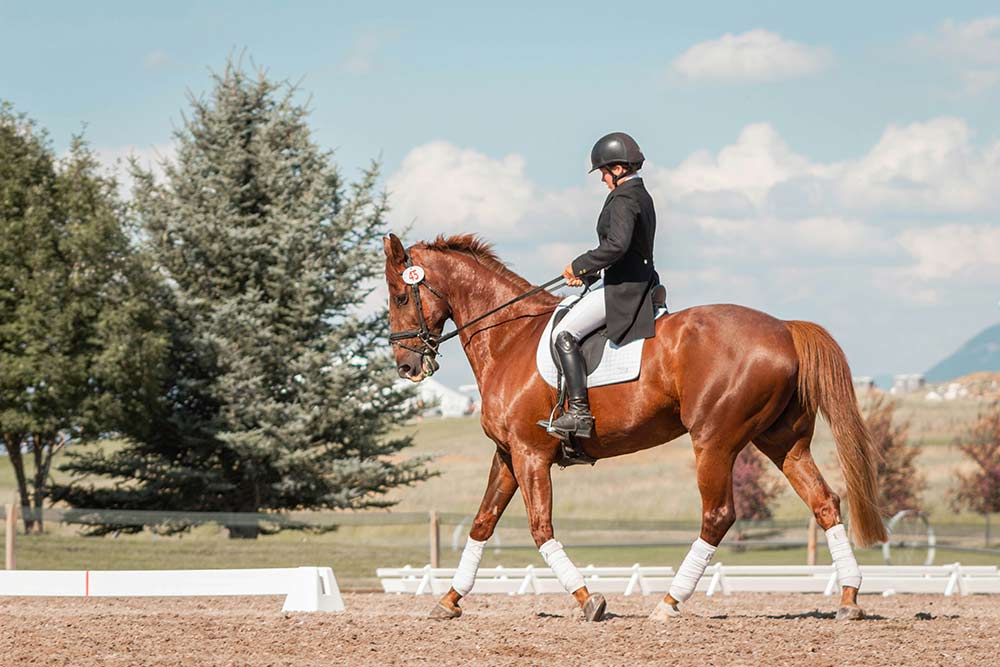
Most riders understand that fitness matters in the saddle. What they don’t realize is that generic gym programs designed for general populations rarely address the specific demands of riding.
Equestrian athletes need targeted strength training that improves position, aids application, stamina during long rides, and injury resilience. The right program makes you a more effective rider. The wrong one wastes time on movements that don’t transfer to the saddle.
This guide breaks down exactly how strength training should support your riding, what to prioritize, and how to structure training around your barn schedule.
Why Riders Need Strength Training
Riding is deceptively demanding. An hour in the saddle requires sustained core engagement, hip stabilization, upper body control, and leg endurance. You’re constantly making micro-adjustments to maintain position, communicate with your horse, and absorb movement.
Most riders develop strength asymmetries from mounting from the left side repeatedly, holding reins predominantly in one hand during certain exercises, and favoring one posting diagonal. Over time, these imbalances create compensation patterns that limit performance and increase injury risk.
Strength training done correctly addresses these issues. It builds the capacity to maintain proper position during long rides, generates clearer aids with less effort, and develops resilience against the repetitive stress that riding places on joints and connective tissue.
The difference between a rider who strength trains intelligently and one who doesn’t becomes obvious during demanding rides, courses, or competitions. Fatigue resistance improves. Position stability increases. Recovery between riding days shortens.
Core Stability Is Non-Negotiable
Riders often misunderstand what “core strength” actually means. It’s not about visible abs or how many crunches you can perform. It’s about your ability to maintain a stable, aligned position while your legs and arms move independently and your horse creates constant instability beneath you.
Your core acts as the central link between your upper and lower body. Every aid you apply flows through that connection. A weak or unstable core forces you to grip with your legs, brace with your hands, or collapse at the waist, all of which interfere with effective communication and balanced riding.
Effective core training for riders emphasizes anti-rotation stability (resisting twisting forces), anti-extension stability (preventing your lower back from arching excessively), and anti-lateral flexion (preventing side-to-side collapse). These capacities transfer directly to maintaining position during transitions, turns, and unexpected movements.
Hip Mobility and Strength Work Together
Tight hips are one of the most common limitations riders face. Restricted hip mobility forces compensation patterns that interfere with proper leg position, create tension in your seat, and limit your ability to move with your horse’s motion.
But mobility alone isn’t enough. You also need strength through your available range of motion. A rider with flexible hips but no strength to control that range will be just as ineffective as someone who’s tight.
The goal is mobile, strong hips that can maintain proper leg position without gripping, allow your seat to follow your horse’s movement, and generate clear leg aids without bracing your entire lower body.
Hip-focused training should include both mobility work (hip flexor stretches, 90/90 stretches, controlled articular rotations) and strength development (split squats, lateral lunges, single-leg deadlifts, clamshells with resistance).
Upper Body Strength for Control Without Tension
Maintaining soft, following hands while still providing clear rein contact requires upper body strength most riders don’t develop through riding alone. Your shoulders, upper back, and arms need endurance to sustain proper position and enough strength to manage a strong horse without creating tension in your hands.
Riders who lack upper body strength tend to rely on grip strength in their hands and forearms, which creates hard, unresponsive contact. They also tend to round their shoulders forward and collapse through their chest, which interferes with balance and breathing.
The solution isn’t bodybuilder-style training. It’s functional upper body strength that supports proper posture and allows your arms to function independently from your core and seat.
Rows, face pulls, overhead carries, and controlled push-up variations build the strength and endurance needed for effective riding. These movements develop your upper back (which supports proper shoulder position), strengthen your posterior shoulder muscles (which prevent forward rounding), and build grip endurance without creating excessive tension.
Leg Strength and Endurance
Your legs provide stability, generate aids, and absorb impact during posting or jumping. Weak legs force you to grip for security, limit your ability to maintain proper calf position, and fatigue quickly during demanding rides or courses.
Single-leg exercises are particularly valuable for riders because they address left-right imbalances and require stability similar to what you need in the saddle. Split squats, step-ups, single-leg deadlifts, and lateral lunges all build leg strength in ways that transfer directly to riding.
Traditional bilateral exercises like squats and deadlifts have value for general strength development, but they don’t address the asymmetries riders develop. A balanced program includes both.
Endurance matters as much as strength. Your legs need to function effectively during hour-long lessons, multi-round competitions, or long trail rides. Higher-rep training, timed holds, and conditioning circuits develop the muscular endurance riding demands.
Balance and Proprioception Training
Riding requires constant balance adjustments in response to your horse’s movement, terrain changes, and unexpected reactions. The better your balance and body awareness, the more quickly you can make corrections and the more stable your position remains.
Balance training doesn’t require expensive equipment. Single-leg exercises naturally challenge balance. Unstable surface work (balance boards, foam pads, stability discs) forces your nervous system to make rapid adjustments similar to what happens on a moving horse.
Proprioception exercises like single-leg deadlifts with eyes closed, balance board squats, or carrying weights in offset positions all improve your body’s ability to sense position and make corrections automatically.
This type of training creates riders who maintain position instinctively rather than thinking through every adjustment consciously.
Common Mistakes Riders Make
Training like a bodybuilder: Riders don’t need hypertrophy programs focused on muscle size. You need strength, stability, and endurance in movement patterns that support riding.
Ignoring asymmetries: If you always mount from the left and hold your reins primarily in your left hand during certain exercises, you’re developing imbalances. Your training should address these, not reinforce them.
Skipping mobility work: Strength without mobility creates stiff riders. Both matter.
Training too close to important rides: Heavy leg training the day before a competition guarantees sore, fatigued legs when you need peak performance.
No progression plan: Doing the same workout with the same weights forever creates maintenance, not improvement. Progress should be systematic and trackable.
Recovery Considerations for Riding Athletes
Riding is physically demanding, even if it doesn’t feel like traditional cardio or strength training. When combined with structured strength work, total training volume adds up quickly.
Pay attention to recovery signals. Persistent muscle soreness, declining riding performance, difficulty sleeping, or increased irritability all indicate you may be pushing too hard without adequate recovery.
Recovery strategies for riders should include quality sleep (7-9 hours nightly), adequate protein intake (supporting both riding and strength training demands), active recovery on easy days, and intentional rest when needed.
Stretching, foam rolling, and mobility work between training sessions help manage muscle tension and maintain the range of motion riding requires.
Working With Trainers Who Understand Riding
Generic personal trainers may not understand the specific demands equestrian athletes face. You need someone who recognizes that improving your riding performance is the goal, not just getting stronger in the gym.
When evaluating trainers, ask about their experience with equestrian athletes. Do they understand the asymmetries riders develop? Can they program around competition schedules? Do they recognize the difference between general fitness and sport-specific preparation?
The right coach builds programming that makes you a more effective, resilient rider. The wrong one treats you like every other client and wonders why the generic program doesn’t create the results you need.
Getting Started
If you’re new to strength training, start with movement quality and consistency before worrying about advanced programming or heavy weights. Learn proper form on fundamental exercises. Build the habit of showing up for focused sessions regularly.
If you already strength train but haven’t tailored programming to riding, start by addressing the most common rider limitations: core stability, hip mobility, and upper body endurance. Even small adjustments create noticeable improvements in the saddle.
Track your progress both in the gym and in your riding. Are you maintaining position longer without fatigue? Are your aids clearer? Is your seat following your horse’s motion more smoothly? These riding-specific improvements matter more than gym numbers.
Train Smart. Ride Better.
Strength training done correctly makes you a more capable, resilient rider. It addresses the asymmetries and limitations riding creates while building the capacity to perform at your best during long rides, demanding courses, and competitive situations.
KB Fitness serves Ocala’s equestrian community with strength training programs designed specifically for riders. Located at 2506 SE 17th Street, Unit B, we understand the unique demands equestrian athletes face and build programming that complements your time in the saddle.